

Muay Thai Shorts vs MMA Shorts vs Boxing Shorts: Key Differences
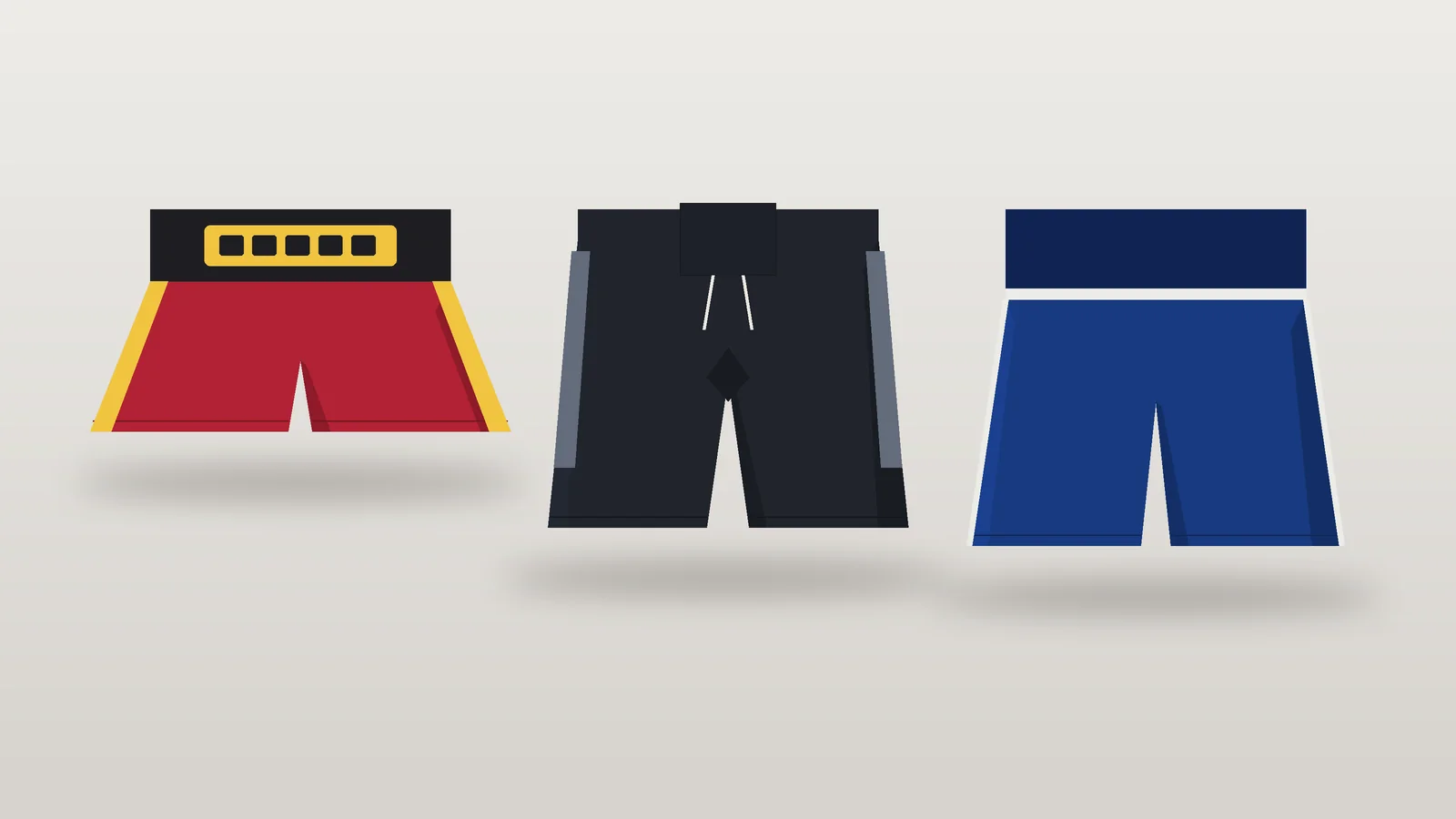
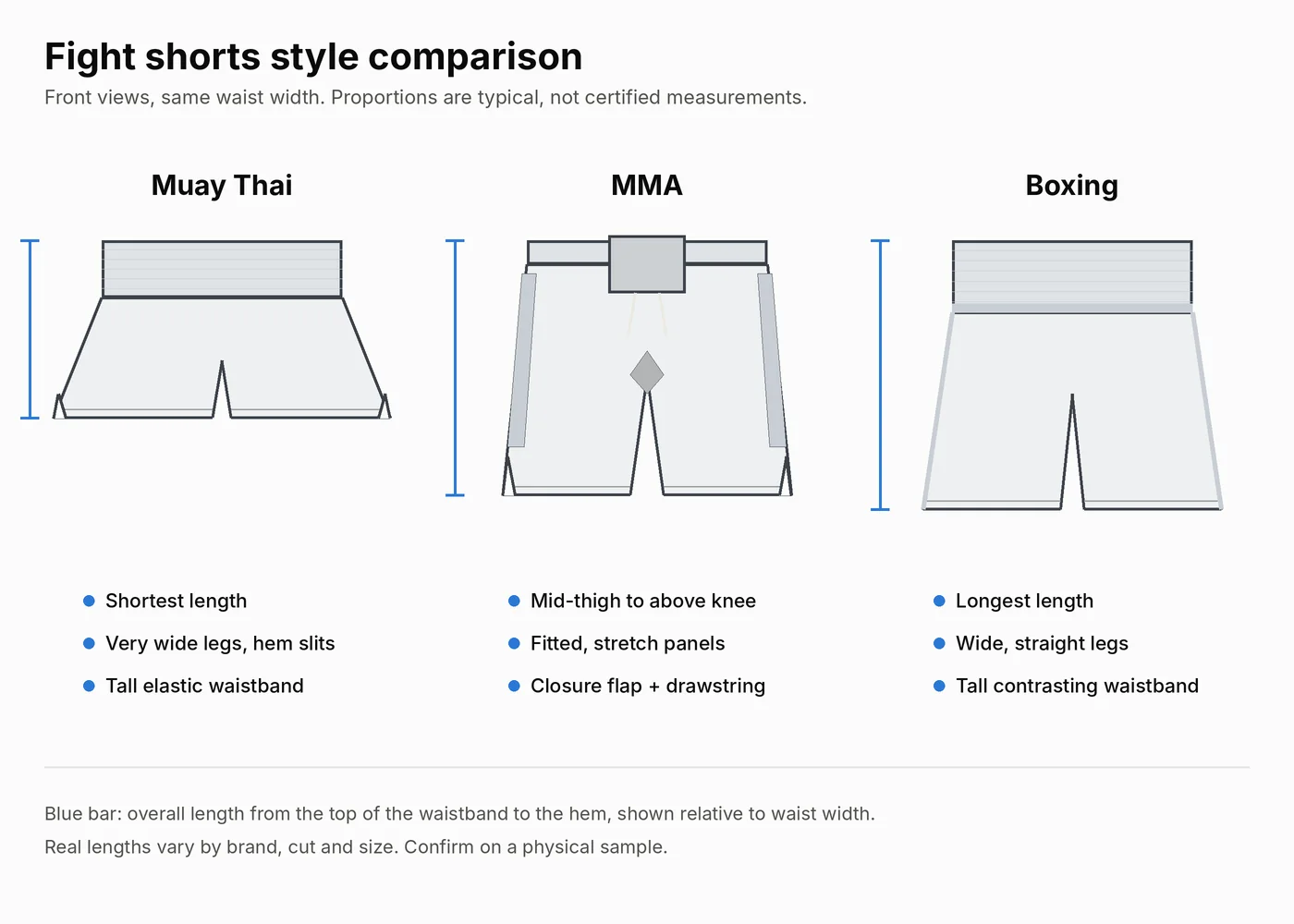
In the Muay Thai shorts vs MMA shorts comparison, the core difference is the job each one does. Muay Thai shorts are short, with very wide legs, so nothing restricts a high kick or a knee. MMA shorts are longer and more fitted, with stretch and a secure closure for wrestling and ground work. Boxing shorts are the longest of the three, with a high, wide waistband, because boxers never kick.
Those differences matter to two groups: athletes choosing what to train in, and the brands and gyms that design and stock fightwear. Best Gym Wears manufactures gym wear, fitness apparel and fightwear for both kinds of buyer, so this guide covers the comparison from the athlete’s side and from the product-development side.
For academies and labels building a striking range, the style decision comes before fabric, artwork or quantities. A gym that trains mostly Muay Thai needs a different core product from an MMA academy, and many brands start with custom Muay Thai shorts because they work for Muay Thai, kickboxing and striking-focused fitness classes.
US combat apparel businesses often develop these products with overseas factories, so it helps to know the competition and design differences before a sample is made. Best Gym Wears produces in Sialkot, Pakistan, and ships to US buyers; its page on fitness apparel manufacturing for USA brands explains how that sourcing works. The rest of this guide stays on the shorts themselves.
Muay Thai vs MMA vs Boxing Shorts: Side-by-Side Comparison
The table sets out Muay Thai shorts vs MMA shorts with boxing shorts alongside, covering the three main types of fight shorts. Designs vary between brands, so read each row as the typical pattern rather than a fixed specification.
| Feature | Muay Thai shorts | MMA shorts | Boxing shorts |
|---|---|---|---|
| Typical length | Shortest; ends high on the thigh | Mid-thigh to just above the knee | Longest; often near the knee |
| Leg opening | Very wide, often with side slits at the hem | Narrower, often with side slits or a split hem | Wide and straight |
| Fit | Snug at the waist, loose through the leg | Closer through the hip and thigh | Loose through the leg, high in the rise |
| Waistband | Tall elastic band, often with an inner drawstring | Lower band with drawstring, hook-and-loop or lace closure | Tall, wide elastic band, often in a contrasting color |
| Common materials | Satin, polyester satin, microfiber | Polyester with stretch panels or four-way stretch | Satin or lightweight polyester |
| Movement priority | Kicks, knees and clinch work | Sprawls, shots, guard work and scrambles | Footwork and upper-body movement |
| Best applications | Muay Thai, kickboxing, striking fitness | MMA, no-gi grappling, mixed classes | Boxing training and bouts |
| Decoration areas | Front waistband panel and leg panels | Leg panels and side panels | Waistband and leg |
| Training suitability | Striking only; limited coverage on the ground | All-round; the most versatile of the three | Boxing and conditioning; restricts high kicks |
Three Questions That Decide the Right Style
Most Muay Thai shorts vs MMA shorts decisions, and the boxing question too, come down to three things.
- Do you kick above the waist? If yes, the leg opening matters most, and Muay Thai shorts (or a slit MMA short) are the safer choice.
- Do you take the fight to the mat? If yes, you need stretch, coverage and a closure that stays shut, which points to MMA shorts.
- Will you compete, and under which rules? Competition rules can make the decision for you, so check them before buying or designing.
What Makes Muay Thai Shorts Different?
Muay Thai shorts are built around the kick. A roundhouse or a high knee needs the thigh to rise and rotate without fabric pulling across it, so the legs are cut very wide and the inseam is short. Many styles add a small slit at the outer hem to free the leg further.
The waistband is the other signature. It is tall and elastic, often with a drawstring inside, and it sits at or slightly above the natural waist so the shorts stay in place during clinch work. That tall band is also the main branding area, which is why so many Muay Thai shorts carry large lettering across the front.
In the Muay Thai vs boxing shorts comparison, Muay Thai shorts are also the more decorative style, with bold colors, contrast panels and traditional script. They suit pad work, bag work, sparring, clinching and striking-based fitness classes. On the ground they offer little coverage and no stretch, so they are a weak choice for wrestling or guard work.
Fabric options, cut variations and construction details are covered in depth in our separate Muay Thai shorts guide; this article focuses on how the style compares with the other two.
MMA Fight Shorts: Why They Are Built Differently
MMA combines striking, wrestling and submission grappling, so the shorts have to handle all three. That is the real difference between Muay Thai and MMA shorts: one is built for striking range, the other for the whole fight, and it changes the design in four ways.
- Stretch and coverage. MMA shorts are longer and closer fitting than Muay Thai shorts, so they cover the thigh during scrambles and guard work. Stretch side panels, a four-way stretch fabric or a crotch gusset let the hips open fully when sprawling or shooting.
- Waist security. A takedown or a scramble pulls hard on the waistband. MMA shorts usually combine a drawstring with a hook-and-loop or lace-up closure so they stay put when someone grips or drags them.
- Durability. Mat work rubs fabric against canvas, mats and another person, so MMA shorts tend to use tougher polyester and reinforced seams rather than delicate satin.
- Nothing to catch. Pockets, exposed zippers and hard trims are a hazard when two people are grappling, which is why fight-ready MMA shorts avoid them.
Compared with ordinary gym shorts, MMA shorts have no pockets, a more secure closure, stronger seams and a cut that allows a full split or a high guard without tearing. Board-short-style MMA shorts work for training and competition; short, close-fitting styles (sometimes called vale tudo shorts) suit grappling-heavy athletes who want nothing loose to grab.
Boxing Shorts vs Muay Thai Shorts: How They Compare
Boxing shorts are the longest of the three because boxing has no kicks. A boxer needs free footwork, a stable base and a clear target line, and long, loose legs do not get in the way of any of that.
Traditional Boxing Trunks
Traditional trunks have a tall, wide elastic waistband sitting high on the body. The waistband marks the belt line, the boundary below which punches are fouls, so competition trunks are designed to make that line easy for the referee to see. That is why amateur rules often require a contrasting waistband color.
Modern Boxing Training Shorts
Boxing training shorts are often shorter and lighter than competition trunks, closer to a regular athletic short with a wide waistband. They suit conditioning, bag work and sparring, while traditional trunks remain the standard for bouts.
Branding on boxing shorts usually sits on the waistband and down the leg. For amateur competition, decoration may be restricted, so brands producing team trunks should confirm the rules for the events their customers enter.
Which Shorts Work Best for Each Combat Sport?
The Muay Thai shorts vs MMA shorts choice looks different in each sport, and boxing adds a third option.
| Sport | Best primary choice | Works as a backup | Notes |
|---|---|---|---|
| Muay Thai | Muay Thai shorts | MMA shorts with side slits | Leg opening is the priority |
| MMA | MMA shorts | Muay Thai shorts for striking-only sessions | Closure and stretch matter on the mat |
| Boxing | Boxing shorts or trunks | MMA or Muay Thai shorts for casual training | Competition rules are the strictest |
| Kickboxing | Muay Thai or kickboxing shorts | Slit MMA shorts | Similar demands to Muay Thai |
| BJJ / no-gi grappling | MMA or grappling shorts, often over spats | Close-fitting vale tudo shorts | Avoid wide legs that fingers and toes can catch |
| General combat fitness | Any of the three | Regular training shorts | Comfort and freedom of movement matter most |
Cross-training in another style is fine for most gym sessions, and most fight shorts for training handle a class outside their home sport. A Muay Thai fighter can do a boxing class in Muay Thai shorts, and an MMA athlete can hit pads in MMA shorts. A dedicated design becomes the better choice when the session leans heavily on one demand: lots of high kicks, long grappling rounds, or a bout under specific rules.
Can You Wear Muay Thai Shorts for MMA or Boxing?
For casual training, usually yes, and this is where Muay Thai shorts vs MMA shorts matters least. Muay Thai shorts work for striking sessions in an MMA gym and for most boxing classes. They become a poor fit once grappling starts, because the wide legs offer little coverage and can catch fingers and feet.
Sparring and competition are different questions, and the answer depends on who sanctions the event.
- MMA: in the United States, professional MMA is generally regulated by state athletic commissions using the Association of Boxing Commissions’ Unified Rules. Those rules state that fighting shorts must not have exposed hook-and-loop, pockets or zippers. Several commission rules list MMA shorts, biking shorts or kickboxing shorts as acceptable, and some amateur rules leave final approval to the inspector. A Muay Thai-style short may be accepted at some events and questioned at others.
- Boxing: boxing rules are stricter. Professional rules in some jurisdictions set trunk length limits and require the belt line to be clear. At least one USA Boxing event packet explicitly bans gladiator or Thai-type trunks, along with adornments such as metal or sequins. Plan on proper boxing trunks for any sanctioned bout.
- Muay Thai: Muay Thai rulebooks from bodies such as the WBC Muay Thai and WMC expect shorts worn at about half-thigh length, in a color matching the fighter’s corner.
These rules change and vary by governing body, state commission and promotion. Always check the current rules for the specific event rather than relying on a general guide, including this one.
Which Fight Shorts Should a New Brand Include in Its Collection?
For a brand, Muay Thai shorts vs MMA shorts is a range decision as much as a product one, and the right combat sports collection comes from the customer, not from copying a competitor’s catalogue. Start by deciding who you are selling to.
- Striking-focused customers. Muay Thai and kickboxing gyms buy Muay Thai shorts first. A traditional cut and a modern, slightly longer cut cover most preferences.
- MMA and grappling customers. MMA academies need board-style MMA shorts, and no-gi athletes may also want close-fitting grappling shorts. Durability and closure quality drive repeat orders.
- Boxing teams and academies. Boxing clubs need competition trunks in corner colors and lighter training shorts. Competition trunks have the strictest rules, so they need the most careful spec.
- Mixed-discipline gyms. A gym running Muay Thai, boxing and MMA classes can often cover most members with one Muay Thai short and one MMA short, adding boxing trunks only if it fields a competition team.
Plan the Range Before the Artwork
For a first retail drop, one hero style done well usually sells better than three styles done thinly. Choose the style that matches your strongest customer group, then add a second style once you know your sizes and colors. Keep artwork consistent across styles so the range reads as one brand.
Size Ranges and Fit
Each style fits differently. Muay Thai shorts are usually sized by the waist and sit high, MMA shorts fit closer through the thigh, and boxing trunks have a high rise. Build a separate size chart for each style, decide whether you need women’s and youth sizes, and check every size on a fit sample rather than assuming one chart covers the range.
Branding and Customization
Muay Thai shorts carry large front-waistband graphics and contrasting leg panels well. MMA shorts suit full sublimation across the leg panels, with the waistband kept simple. Boxing trunks show branding on the waistband and down the leg. Plan any competition versions without decoration that event rules might restrict.
Sample Approval
Approve a physical sample of every style before bulk production. Check the closure, waistband stretch, slit position and length on a person moving, not just on a flat table. At Best Gym Wears, custom Muay Thai shorts currently start from 20 pieces per style, which makes it practical to test a style before committing to a larger run.
What to Check Before Ordering Custom Fight Shorts
- Discipline and use: training, competition or both, and under which rules.
- Style and length: Muay Thai, MMA or boxing cut, with your target length for each size.
- Leg opening and slits: width at the hem and slit depth, checked against the kicks or grappling your customers do.
- Waistband and closure: elastic height, drawstring, hook-and-loop or lace-up, and whether any closure must be covered for competition.
- Fabric and stretch: satin, polyester satin or stretch polyester, matched to the movement the shorts must allow.
- Size range: your size chart per style, including women’s or youth sizes if needed.
- Decoration: sublimation, embroidery or patches, and where each sits.
- Colors: including competition corner colors and a contrasting waistband for boxing trunks.
- Sample sign-off: a physical sample tested in motion before bulk production.
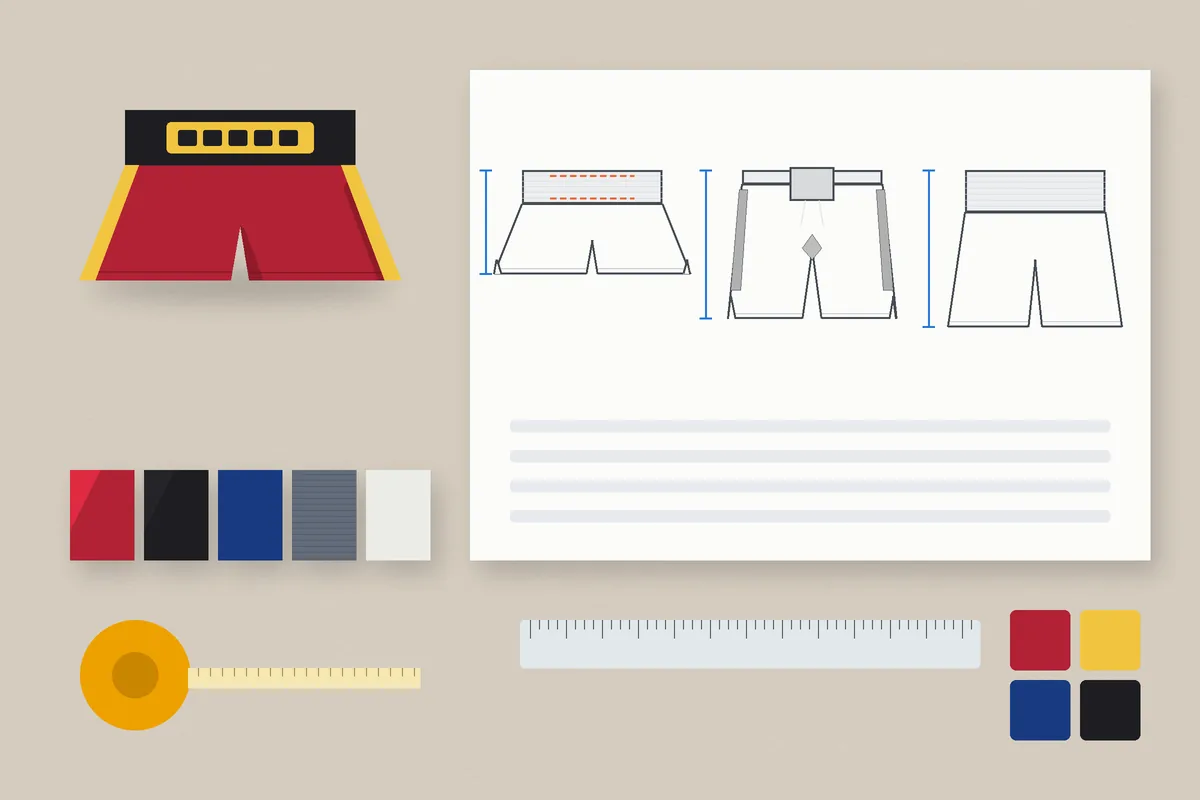
Common Mistakes When Choosing Fight Shorts
- Choosing appearance over movement. A great-looking short that pulls on a high kick or rides up in a sprawl will not be worn twice, and for a brand it means returns.
- Wrong fit. Muay Thai shorts sized like regular shorts often sit too low or slip. Fit by the waist and check the rise.
- Unsuitable closures. An exposed hook-and-loop strip can fail an MMA equipment check, and a drawstring alone may not survive a scramble.
- Fabric that does not match the use. Delicate satin wears quickly on a grappling mat, and heavy non-stretch fabric restricts kicks.
- Assuming competition rules are universal. A short approved at one event can be rejected at another. Check the rules for each sanctioning body.
- Approving bulk without a physical sample. Length, slit position and waistband tension look different on a person than in a mockup, so problems found after bulk production cost the whole run.
Frequently Asked Questions
Can you wear MMA shorts for Muay Thai?
Yes, for most training, which is the most common Muay Thai shorts vs MMA shorts question gyms hear. MMA shorts with side slits or a split hem allow enough leg movement for kicks and knees. Some fighters find longer, fitted MMA shorts restrict high kicks, so slit or shorter styles work better. For a sanctioned Muay Thai bout, check whether the rules expect traditional Muay Thai shorts.
Are boxing shorts and Muay Thai shorts the same?
No. Both have a tall elastic waistband, but boxing shorts are much longer with straight legs, while Muay Thai shorts are short with very wide legs for kicking. In amateur boxing, Thai-style trunks can be banned outright, so the two are not interchangeable for competition.
Can MMA shorts be used for kickboxing?
Usually, yes. Kickboxing involves kicks and knees but no grappling, so MMA shorts with side slits or good stretch work well. Some kickboxing events specify kickboxing or Muay Thai shorts, so check the rules before competing in MMA shorts.
What shorts are best for no-gi training?
Close-fitting MMA or grappling shorts, often worn over spats or compression shorts. They have no pockets, nothing loose for fingers and toes to catch, and enough stretch for guard work. Wide Muay Thai shorts are a poor choice because the leg openings catch during scrambles.
Are kickboxing shorts the same as Muay Thai shorts?
They are very similar, and many brands sell one design for both. Kickboxing shorts are sometimes slightly longer or plainer, but both use a tall elastic waistband and wide legs for kicking. Rulebooks often group them together.
Do I need compression shorts under fight shorts?
Not always, but many athletes wear them for support and coverage, especially under Muay Thai or MMA shorts. Some competition rules specifically permit form-fitting compression shorts without padding under fight shorts, while others may not mention them, so check before a bout.
Choosing the Right Fight Shorts
Muay Thai shorts vs MMA shorts, with boxing shorts as the third option, comes down to movement. Muay Thai shorts free the legs for kicks and knees, MMA shorts add stretch, coverage and a secure closure for grappling, and boxing shorts give a high, clear waistband for a sport with no kicks. Choose by the sport you train most, then check the rules before you compete. For brands and gyms, the same logic decides the first style to develop: match the product to your strongest customer group, approve a sample in motion, and build the range from there. If you are planning a fightwear range, share your styles, size range and artwork with the Best Gym Wears team to discuss a first sample.