
The best fabric for t shirts depends on what the shirt needs to do. Cotton jersey is a strong starting point for everyday comfort and graphic tees. Polyester performance knits suit sweat-heavy activity and sublimation. Cotton-polyester blends can balance a familiar feel with easier care. Choose by intended use, fit, decoration, washing expectations and price point, rather than fiber name alone.
For a clothing brand, the decision becomes useful when it can be turned into a sample. Best Gym Wears’ custom T-shirt manufacturing service connects fabric selection with fit, artwork and sample approval before bulk production.
Choose the Best Fabric for T Shirts by Product Type
Start with the product you plan to sell. These are sampling directions, not guarantees that every fabric in a category will perform alike.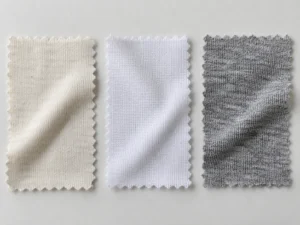
An oversized gym pump cover and a running shirt can belong to the same brand while needing very different materials. The best fabric for t shirts in that collection may therefore be two separate specifications.
Understand T-Shirt Fabric Types Before Comparing Them
Fabric descriptions often mix together four different things:
Fiber: Cotton, polyester and elastane describe what the material contains.
Yarn preparation and spinning: Combed and ring-spun describe processing choices.
Knit construction: Single jersey, interlock, mesh and piqué describe how the fabric is formed.
Weight and finish: GSM, surface treatments and finishing influence how the finished material behaves.
A shirt can be cotton, combed, ring-spun and single jersey at the same time. “Cotton versus jersey” is therefore not a useful comparison. Ask for the complete description, then compare samples made for the same job.
Cotton jersey: a practical choice for everyday tees
Cotton T-shirt fabric suits casual collections where skin feel, absorbency and a familiar appearance matter. A smooth jersey surface also provides a useful base for many printed graphics.
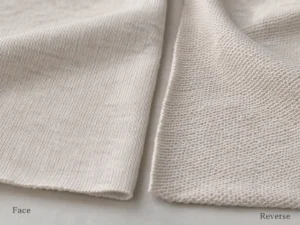
The cotton terms on a specification need careful reading:
100% cotton identifies fiber content. It does not specify softness, weight or shrinkage.
Combed cotton has undergone an additional preparation step that removes short fibers and can improve the resulting yarn’s feel.
Ring-spun cotton identifies the spinning method. It can produce a soft hand, but the finished fabric still depends on yarn selection, knitting and finishing.
Cotton single jersey identifies a common T-shirt knit construction.
Cotton Incorporated explains these distinctions in its resources on fiber preparation and yarn spinning.
Cotton can retain considerable moisture during exercise, and dimensional change after washing needs attention. Do not treat “preshrunk” as a promise of zero shrinkage. Assess the finished sample using its intended care instructions.
Polyester: useful for performance and sublimation
Polyester T-shirt fabric is worth considering when faster drying, resistance to wrinkling or sublimated artwork is central to the product. Its feel can range from smooth and fine to textured or noticeably synthetic.
However, polyester content alone does not prove moisture-wicking performance. Wicking means moving liquid through or across the fabric; absorbency means taking it up. Yarn design, knit structure and finishes affect the result. Cotton can also be engineered for moisture management, as demonstrated by Cotton Incorporated’s performance-cotton technology.
For training apparel, compare the actual material during wear and after laundering. A soft swatch does not establish how a shirt handles sweat.
Cotton-polyester blends: balance feel with care requirements
A cotton-polyester blend can be a sensible choice for staff clothing, merchandise and everyday collections that need a balance of comfort and shape retention. Adding polyester can reduce some of cotton’s wrinkle and shrinkage tendencies, although construction and finishing remain important.
Check the named fiber percentages. “Cotton blend” does not tell you which fiber dominates, and a blend is not automatically cheaper or better than pure cotton. Surface feel, pilling, decoration and finished cost still need comparison.
For repeat-use uniforms, the best fabric for t shirts may be the blend that keeps the approved fit and appearance under the customer’s normal washing routine.
Cotton-elastane: choose it for stretch and recovery
Elastane, also called spandex, adds elastic stretch. Cotton-elastane jersey can work well for fitted tees that should move with the wearer while retaining a cotton feel.
Check recovery, meaning how well the material returns after stretching. Also inspect coverage across the chest and shoulders. More stretch does not necessarily mean better fit, and the artwork must tolerate the movement required of the garment.
Interlock, micro mesh and piqué: construction changes the result
Interlock is a double-knit construction with a similar appearance on both sides and good structural stability. Polyester interlock can suit training tees where a smooth surface is wanted. Micro mesh introduces small openings that can support ventilation, but coverage and print detail need checking. Piqué has a textured surface and is particularly relevant to polos and collared staff apparel. CottonWorks’ knit-construction guide explains how these structures differ.
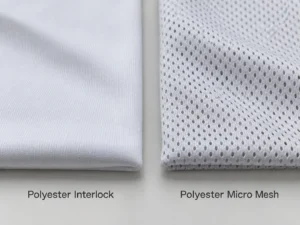
Best Gym Wears lists cotton single jersey, cotton-elastane, microfiber polyester, polyester interlock, micro mesh and piqué among its fabric options for custom apparel. Confirm the composition, weight, color and availability of the specific material proposed for your order.
Cotton vs Polyester T Shirts: Compare the Tradeoffs
The best fabric for t shirts is the one whose tradeoffs fit the product. A polyester-rich running shirt and a cotton graphic tee should not be judged against identical expectations.
For a broader comparison across apparel categories, see our guide to polyester versus cotton.
Match Fabric to Fit, Climate and Retail Positioning
Everyday and premium T-shirts
For everyday tees, begin with cotton jersey and compare a blend if easy care is a priority. For premium positioning, assess surface smoothness, hand feel, opacity and consistency after washing. A combed cotton T-shirt can be a good candidate, but the label alone does not establish quality.
The best fabric for t shirts sold at a higher price must support what the customer can actually notice. A stable neckline and an attractive fit after washing matter alongside initial softness.
Oversized T-shirts and streetwear
For a boxy silhouette, sample a denser jersey with enough structure to support the dropped shoulder and wider sleeve. For a loose, flowing silhouette, compare a softer fabric with more drape.
Heavyweight T-shirt fabric can create substance, but excessive weight may make a warm-weather product uncomfortable. Oversized describes the pattern and proportions; it does not require one particular GSM.
Gym shirts, running shirts and hot-weather tees
The best fabric for gym T-shirts intended for hard training is usually a performance knit selected for moisture movement, drying and unrestricted motion. Consider suitable polyester or polyester-elastane, and evaluate micro mesh where extra ventilation is useful.
For casual hot-weather wear, lightweight cotton jersey may feel comfortable. For sustained sweating, compare engineered performance fabrics. Breathable T-shirt fabric also needs a suitable fit: a dense knit or a large solid print can limit airflow even when the base material feels light.
What Is the Best GSM for T Shirts?
GSM means grams per square meter: the mass of a measured area of fabric. A 200 GSM fabric weighs 200 grams per square meter. That is not the weight of the finished shirt and is not a direct thickness measurement.
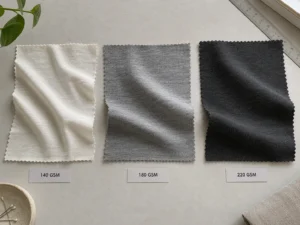
To begin a sampling discussion, consider these broad reference points:
Around 140–160 GSM: Explore lighter cotton tees where low weight is important; check transparency and shape.
Around 160–200 GSM: Compare everyday cotton tees for a balance of substance and wearability.
Around 220–260 GSM: Explore structured cotton streetwear or heavier oversized styles; assess warmth and drape.
These are general starting points, not universal textile grades or confirmed Best Gym Wears stock ranges. Performance knits need their own assessment rather than being judged by cotton-tee benchmarks.
Two fabrics at the same GSM can feel different because yarn size, loop structure, fiber content and finishing differ. Higher GSM does not automatically mean better quality, greater softness or lower shrinkage.
Choose the best fabric for t shirts by comparing weight alongside the completed silhouette. If the shoulder collapses, the fabric may need more body. If the garment feels too warm, adding more weight is unlikely to help.
Best Fabric for T Shirt Printing: Select the Method First
The best fabric for t shirts with detailed graphics must also be compatible with the decoration process. Approve the fabric and artwork together.

Standard sublimation relies on polyester in textiles. Cotton requires a different compatible system or additional treatment; it should not be specified as a direct substitute. Sawgrass explains this substrate distinction.
With polyester and stretch blends, heat settings and decoration materials require particular care. Fabric dyes can migrate into a design, and finishes can interfere with transfer adhesion. Follow the decoration supplier’s instructions and test the actual garment, as advised in STAHLS’ heat-printing guidance.
Best Gym Wears’ T-shirt printing methods include screen printing, sublimation, puff printing and vinyl options. Confirm the fabric-and-method combination for your artwork before approving production.
Turn Your Fabric Choice Into a Production Specification
For private label and OEM projects, the best fabric for t shirts must be specific enough to sample, quote and reproduce. Use this approval checklist:
Define the product. State the customer, intended activity, fit, target retail price and artwork requirements.
Identify the material. Record fiber percentages, knit construction, target finished GSM, color and any required finish. Request a swatch or fabric reference.
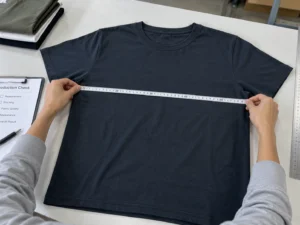
Assess the decorated sample. Check movement, coverage, measurements, seams, collar behavior and how the artwork feels on the body.
Review it after washing. Measure length and width again, and inspect twisting, pilling, color change and decoration. Agree on the care conditions and acceptance criteria.
Keep a reorder reference. Retain the approved sample and written specification. Ask how material substitutions and shade differences will be handled before a repeat order.
For comparable formal wash-test results, consistent procedures matter. AATCC’s laundering guidance explains the role of standardized equipment, detergent and conditions.
Compare the finished garment cost, including decoration and trims. The lowest fabric price may offer little saving if it requires a more expensive print process or fails the sample review.
Best Gym Wears’ apparel production process covers material selection and prototyping. For a private label collection, review label materials and finishing options alongside the garment sample so neck branding and care labels suit the fabric and intended use.
T-Shirt Fabric FAQs
Is 100% cotton the best fabric for T-shirts?
It is a strong choice for everyday comfort and many graphic tees. For sweat-heavy training, a suitable performance knit may be more useful; for easy-care staff clothing, a blend may make sense. Judge the finished fabric and garment, not cotton content alone.
Which T-shirt fabric feels softest?
Combed, ring-spun cotton is a useful starting point for a soft everyday tee. Fine polyester and some blends can also feel soft, so compare swatches and washed samples. Softness does not establish durability or recovery.
Is 180 GSM or 240 GSM better for T-shirts?
For comparable cotton constructions, 180 GSM is a reasonable starting sample for an everyday tee, while 240 GSM may better suit a more substantial streetwear product. Neither number guarantees quality. Compare opacity, drape and comfort in the intended fit.
Can cotton-polyester blends be sublimated?
Standard sublimation colors the polyester portion, so blends can produce a lighter or less saturated result than comparable all-polyester fabric. Confirm the composition and approve a printed sample. Do not assume every blend will reproduce the artwork equally.
Which T-shirt fabric lasts longest?
There is no reliable lifespan ranking based only on fiber content. Polyester can provide strength and dimensional stability, but pilling, snagging, seams and decoration also affect usable life. Compare fabrics under the washing and wear conditions the customer will use.
What fabric should a new clothing brand choose?
Choose for one clearly defined product first. The best fabric for t shirts in a graphic-led casual collection may be smooth cotton jersey; a training collection may need performance polyester. Confirm the choice through a decorated, washed sample before expanding the range.
Develop Your T-Shirt From an Approved Sample
Bring your preferred fabric, fit reference, artwork, estimated quantity and target price to the sampling discussion. Explore custom T-shirt production with Best Gym Wears to turn those decisions into a garment you can review before committing to bulk production.