

Key Points
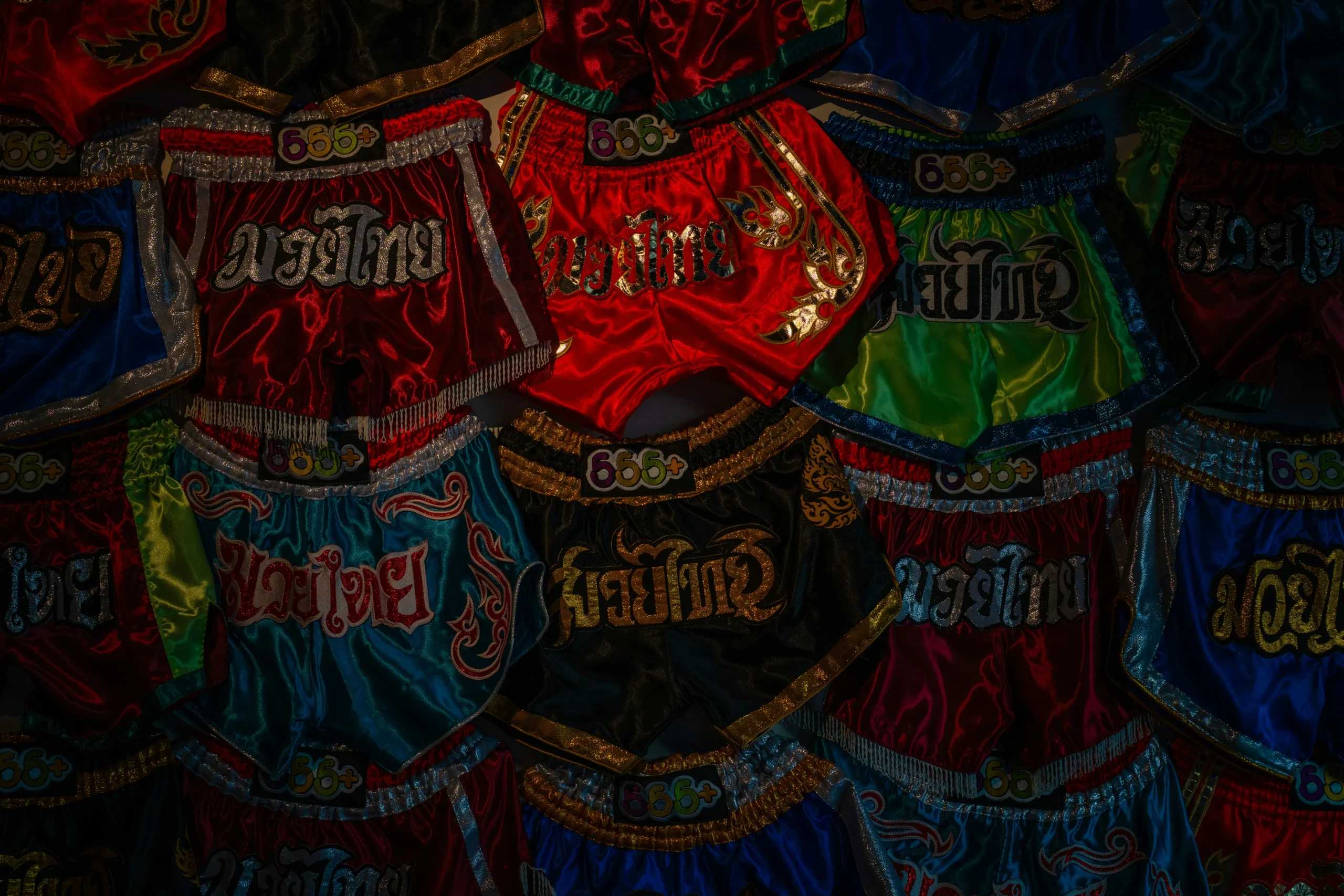
- Muay Thai shorts show more manufacturing faults than any other sportswear item, because they need stretch control, a correctly sized leg split, strong seams, and a full print, all in one product.
- Seven simple checks on one sample tell you how a factory will perform on your whole order.
- A factory that answers your questions with numbers is a real manufacturer. A factory that answers with soft words like “high quality” is often just a trader.
- Good build quality does not change by product. What you find in the shorts, you will find in the hoodies too.
What a Custom Sportswear Manufacturers Actually Covers
A custom sportswear manufacturers builds more than one kind of garment. The work covers gym and training wear, running and athleisure pieces, team uniforms, and combat sports gear, all built to the same standard: fabric that moves with the body, seams that hold under load, and sizing that stays consistent across a full run.
Some factories work as OEM manufacturers, meaning they build a product to your design and spec sheet from the ground up. Others work private label, meaning you customize an existing base pattern with your own fabric, colors, and branding. Both are valid paths. The right one depends on how much design control you need and how fast you want to launch. A factory worth working with should be able to explain the difference in one sentence, not steer you toward whichever is easier for them.
This article uses one product, Muay Thai shorts, to show you how to test any of it. Shorts happen to be the hardest single garment to get right, which makes them the fastest way to see whether a factory's claims match its actual production floor. The same checks apply whether you are ordering shorts, leggings, or a full team kit.
Why a Hoodie Sample Tells You Nothing
Most buyers ask for a hoodie first when they check a new factory. That is the wrong test.
A hoodie is easy to make. It has four panels, a hood, and two cuffs. Thick fabric hides bad stitching. A loose fit hides sizing mistakes. A logo on the chest hides color problems, because there is no seam for the print to cross. Almost any small workshop can make a hoodie that looks fine in a photo but tells you nothing about your real order.
Muay Thai shorts do not let a factory hide.
One pair has a stretch waistband that must be built to the right ratio, a leg split that must be sized correctly for each size, strong stitching at three stress points, thin fabric that shows every needle mark, and often a full print that must line up across a curved seam. Then the shorts get kicked in training. Any fault shows fast, and it shows in real use, not just in a photo.
This is why we send shorts first. Ask any custom sportswear manufacturer for a sample pair of Muay Thai shorts, and you learn in one week what would normally take months to find out.
We make both printed Muay Thai shorts and plain color pairs, on the same lines as our Muay Thai trousers.
What Good Muay Thai Shorts Look Like
Before you check a sample, know what you are checking it against.
Part | Standard | What goes wrong if it fails |
Shell fabric | Polyester satin or microfiber | Fabric goes see-through under light, or loses its shape |
Waistband | Elastic sewn inside, cut to the right stretch ratio | Band rolls or twists, sits crooked on the hip |
Leg split | Sized per size, reinforced stitch at the top | Splits tear, or the leg cannot move freely |
Body seams | Four-thread stitch, reinforced at the crotch | Seam bursts under a kick |
Full dye print on high-poly fabric | Print lines don't match up, color shifts panel to panel | |
Lining | Mesh where the design needs it | Fabric clings or goes see-through |
Check every number in this table against your own factory records before you publish it. Do not publish a number you have not confirmed. A wrong number under your brand name is the kind of mistake a competing factory will use against you.
Full details on the fabric we stock are on the fabrics page.
How the Order Process Should Work
Before you run the seven checks below, know what a properly structured order looks like from first contact to delivery. A factory that skips steps here is a factory that will skip steps on your production floor too.
- Consultation. You share your product, quantities, and target launch date. A real manufacturer asks about your buyer, not just your budget.
- Tech pack and sizing. The factory turns your idea into a written spec sheet: measurements, fabric, construction detail, graded sizing. This document is what production is built against.
- Proto sample. The first physical version, built to test fit and construction, not final fabric or color.
- Fit sample and pre-production sample. Corrections from the proto get applied, then a final sample is built in the real bulk fabric for sign-off.
- Bulk production and quality control. Cutting, sewing, printing, and inspection at agreed checkpoints, not just a single check at the end.
- Shipping. Freight booked, documents prepared, and delivery tracked to your address.
MOQ: [PENDING: confirm real minimum order quantity per design] · Lead time: [PENDING: confirm real proto-to-delivery timeline]. See the full breakdown on the production process page.
Ready to start? Request a sample quote with your product list and target quantity, and we will map out the timeline before you commit to anything.
Seven Checks to Run on Any custom sportswear manufacturer
1. Waistband: does the factory plan, or copy?
Roll the waistband between your fingers first, before anything else.
A good waistband has the elastic sewn inside a fabric channel. The elastic is cut shorter than the channel, by the right amount, so it holds its shape after washing. Get this wrong and the band curls after the first wash.
Ask: what elastic width, what weight, and what stretch ratio did you use?
A real factory gives you three numbers straight away. A copy shop changes the subject and talks about “good quality” instead.
This one detail tells you how the factory will handle every stretch product you order later, like joggers, leggings, and compression pants. Stretch control is a skill. A factory either has it or it does not, no matter what product you order.
2. Leg split: is each size actually sized right?
The split in the leg lets a fighter kick without the fabric pulling tight. It is not just for looks.
Two common mistakes happen here. First, the split is cut the same depth on every size, so it is too small on a 2XL and too open on a small. That is a sizing mistake, and it shows up across your whole order. Second, the top of the split gets a weak stitch instead of a strong, reinforced one, so it tears there first.
Look at the top of the split. You want a tight, small block of stitching, about one centimeter, sitting square across the seam.
Good sizing is the same skill that decides whether your rash guards fit a US buyer correctly, or run a size too small. Ask for the sizing chart, not just one sample. If they cannot give you one, the sizes were guessed.
3. Print: is the color controlled, or guessed?
Full-print shorts use dye that sets with heat, before the fabric is even cut. There is no fixing it after.
Three things to check.
Lines across seams. If a print crosses a side seam, the pattern should line up closely on both sides. If it does not, the cutting table is not lined up with the printed roll.
Color match across panels. Lay the front and back flat in daylight. If the color looks different panel to panel, the press temperature is not steady, and color will shift between batches too.
Stretch test. Pull hard on a printed area. Good dye stays in the fabric. If white shows through, the fabric has too much cotton mixed in, and the print will fade fast.
Ask: what color match standard do you use against our reference color? A good factory holds close to a set number. If they have never heard the term, they are matching by eye, which is fine for one sample but not safe for a big order.
We run both screen print and DTG and embroidery. Which one is right depends on the design, not just the garment.
4. Seams: whose costs come first, yours or theirs?
Turn the sample inside out. Count the thread lines at the seam edge.
Fight wear takes more sideways force than normal gym wear. Strong seams need a four-thread stitch, with reinforced stitching at the crotch, or a flat seam where a smooth finish against skin matters.
A cheaper three-thread stitch uses less thread and costs the factory less. It also fails at the crotch under a hard kick. A factory that uses the cheap stitch on fight wear is protecting its own cost, not your buyer's experience.
This check takes five seconds and tells you a lot.
The same seam standard applies across our BJJ gis, MMA shirt and shorts sets, and karate uniforms, since all of them take the same kind of stress.
5. Fabric paperwork: factory or middleman?
Ask for the fabric details in writing: what it is made of, its weight, its finish, and the mill name.
A real factory answers fast, because it buys the fabric directly. A middleman gives a vague answer, or the fabric changes between the sample and the full order, because it buys from whoever is cheapest that week.
This is the fastest way to tell the two apart. It costs you one email.
If sustainability matters to your buyer, ask this too: do you offer recycled polyester or other lower-impact fabric options, and can you show a supplier certificate for it? A factory with a real sustainable line answers with a fabric name and a certificate. A factory without one talks about intentions instead.
6. Sample steps: who carries the risk?
Time the whole process, not just the sample.
A first sample from an approved spec sheet should take about [PENDING: confirm real number] working days. Much faster often means they pulled an old sample off the shelf, so your real order will not match it. Much slower often means the work is being outsourced, and you lose sight of who is actually making your order.
Ask: what happens after the first sample?
A well-run factory does a first sample, then a fit sample, then a final sample using the real bulk fabric. A factory that skips straight from first sample to full order is passing the risk on to you.
Our full process, step by step, is on the production process page.
7. Branding: can they grow with you?
Your first order might just be shorts. Your fourth order is a full range, and by then your labels, tags, and packaging all need to match.
Ask if branding is made in house or bought from someone else. In house means one point of contact and matching colors across labels, patches, and logos. Bought in means several vendors, several delays, and more chances for your brand color to drift off.
Ask to hold a real branding kit made for another client. A catalog photo is not proof.
Our own branding options are on labels and tags, leather patches, rubber logos, tag cards, and poly bag packing, all made in one place so the colors stay matched.
How to Run This Test Properly
Order the same item from three factories on your shortlist. Same spec sheet, same fabric, same deadline. Then run all seven checks.
You will find the price gap gets smaller and the quality gap gets bigger. The cheapest quote almost always has the weak stitch, the guessed stretch ratio, and the eyeballed color match. None of it shows up until the full order lands at your door.
The same build standard that passes this test on shorts also applies to our custom hoodies, t-shirts, and the rest of our full range. It is a factory-wide standard, not something we only do for one product.
Frequently Asked Questions
Why are Muay Thai shorts harder to make than other sportswear?
They need four skills at once: stretch control at the waist, correct sizing on the split, strong seams, and a full print that lines up across a seam. Most sportswear only tests one or two of these. Shorts test all four at the same time.
What stitch should the seams use?
A four-thread stitch on the main seams, with extra stitching at the crotch. A three-thread stitch is cheaper but fails under sideways force.
What is a good color match standard for printed sportswear?
A tight match against the reference color is what production-grade work looks like. A loose match means the color will shift between batches.
How long should a first sample take?
It depends on how many pieces and processes the design needs. A simple tee moves faster than something like Muay Thai shorts, which needs grading, elastic work, and full sublimation. Ask for a timeline tied to your actual product, not a blanket number.
How do I know if I am dealing with a factory or a trader?
Ask for the fabric details in writing, including the mill name. A factory answers right away, because it buys the fabric. A trader cannot, or the answer changes between the sample and the full order.
Do you work with startups and small brands?
Yes, we work with startups and small brands.
What is your minimum order quantity?
It depends on your order. One design in one color needs a higher minimum. Mixing sizes, colors, or products brings it down. Reorders need less, since the pattern is already built. Tell us your product list and we'll give you a real number.
What is the difference between OEM and private label manufacturing?
OEM means the factory builds a garment to your original design and spec sheet, starting from your idea. Private label means you customize an existing base pattern with your own fabric, color, and branding. OEM gives you more control and usually costs more in development time. Private label gets you to market faster.