
A low MOQ clothing manufacturer is a factory that accepts small production runs, often tens of pieces per style rather than hundreds or thousands, so a new brand can launch without tying up cash in deep inventory. Minimums are set per manufacturer and per product, and they are usually counted per style, per color or per size. The number on a website is only part of the answer: how that minimum is counted decides whether a small order is truly workable.
This guide explains what MOQ means in clothing manufacturing, how minimums are counted and calculated, how low-MOQ production compares with bulk and with domestic sourcing, what drives minimums for specific products, and what a US or international brand needs to check before ordering from an overseas exporter.
It is written by the team at Best Gym Wears, a Pakistan-based gymwear and sportswear manufacturer and exporter in Sialkot. We manufacture products such as custom hoodies, rash guards and gym tank tops for fitness brands, gyms, teams and wholesale buyers in the USA and other markets. Where we quote our own minimums, we say so; everything else applies to any supplier you evaluate.
What Is MOQ in Clothing Manufacturing?
MOQ stands for minimum order quantity: the smallest number of units a manufacturer will produce for one order. In clothing manufacturing, it is the point at which a production run covers the factory's fixed setup work.
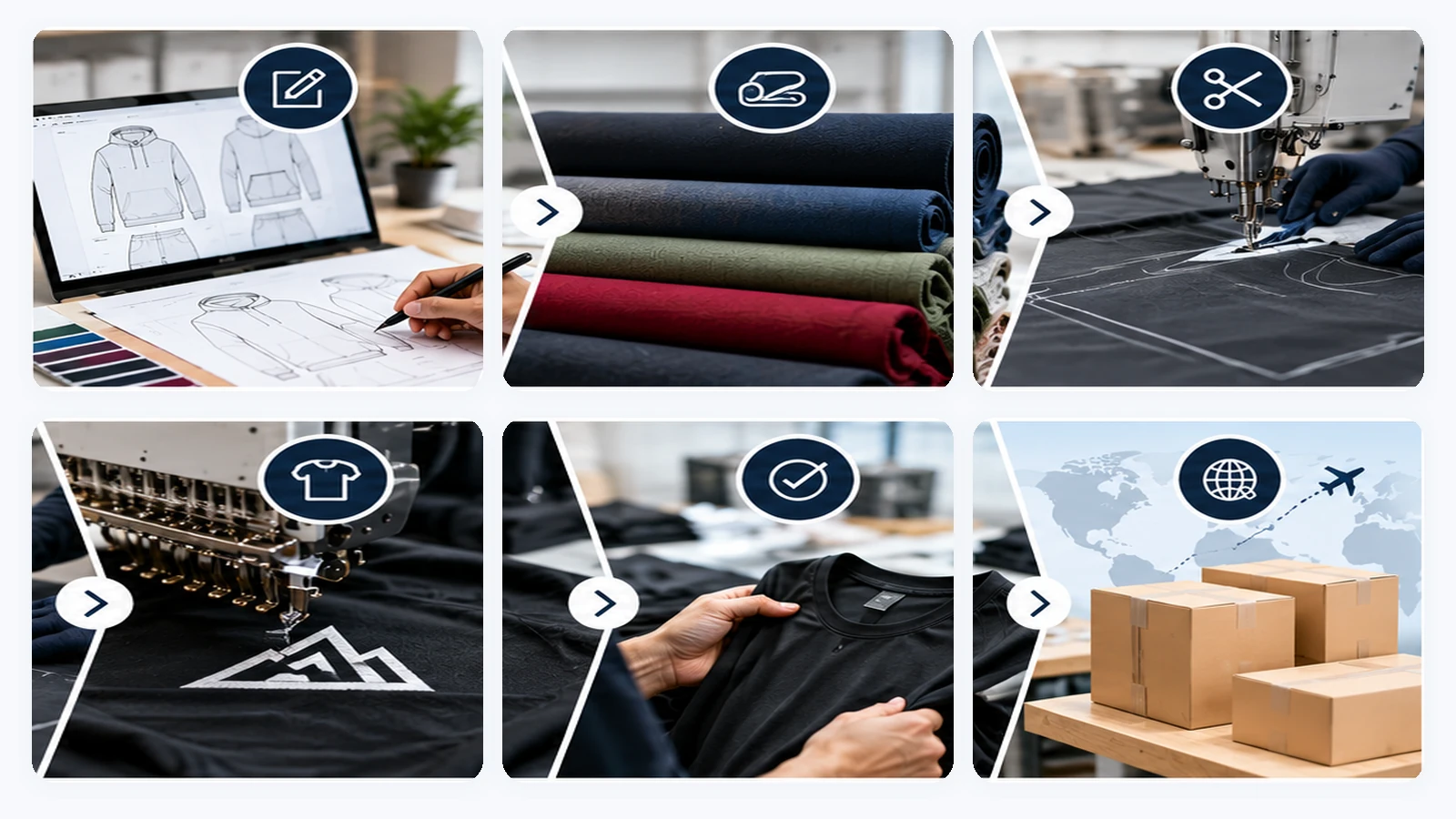
Every run carries costs that do not change much whether the order is 30 pieces or 300:
- Pattern and grading work to turn a design into cut-ready pieces in every size.
- Marker making and cutting setup, where pattern pieces are laid out and fabric is cut.
- Fabric minimums, because mills and fabric suppliers sell by the roll or set their own minimums for custom colors.
- Decoration setup, such as screens for screen printing, digitized files for embroidery, or sublimation print layouts.
- Line setup and quality checks for each new style.
A low MOQ clothing manufacturer spreads those costs over fewer pieces. That is why small-batch units usually cost more per piece than bulk units: part of the price pays for the flexibility of a short run.
What Does "Low MOQ" Mean?
"Low MOQ" has no official definition. It is a relative term: low compared with the factory's normal bulk minimums. Published minimums from small-batch manufacturers we reviewed ranged from about 10 pieces per style at a Los Angeles cut-and-sew studio to around 100 pieces at other suppliers. A minimum that is low for a cut-and-sew garment in custom fabric may be high for a printed blank T-shirt.
How MOQ Is Counted: Per Style, Color and Size
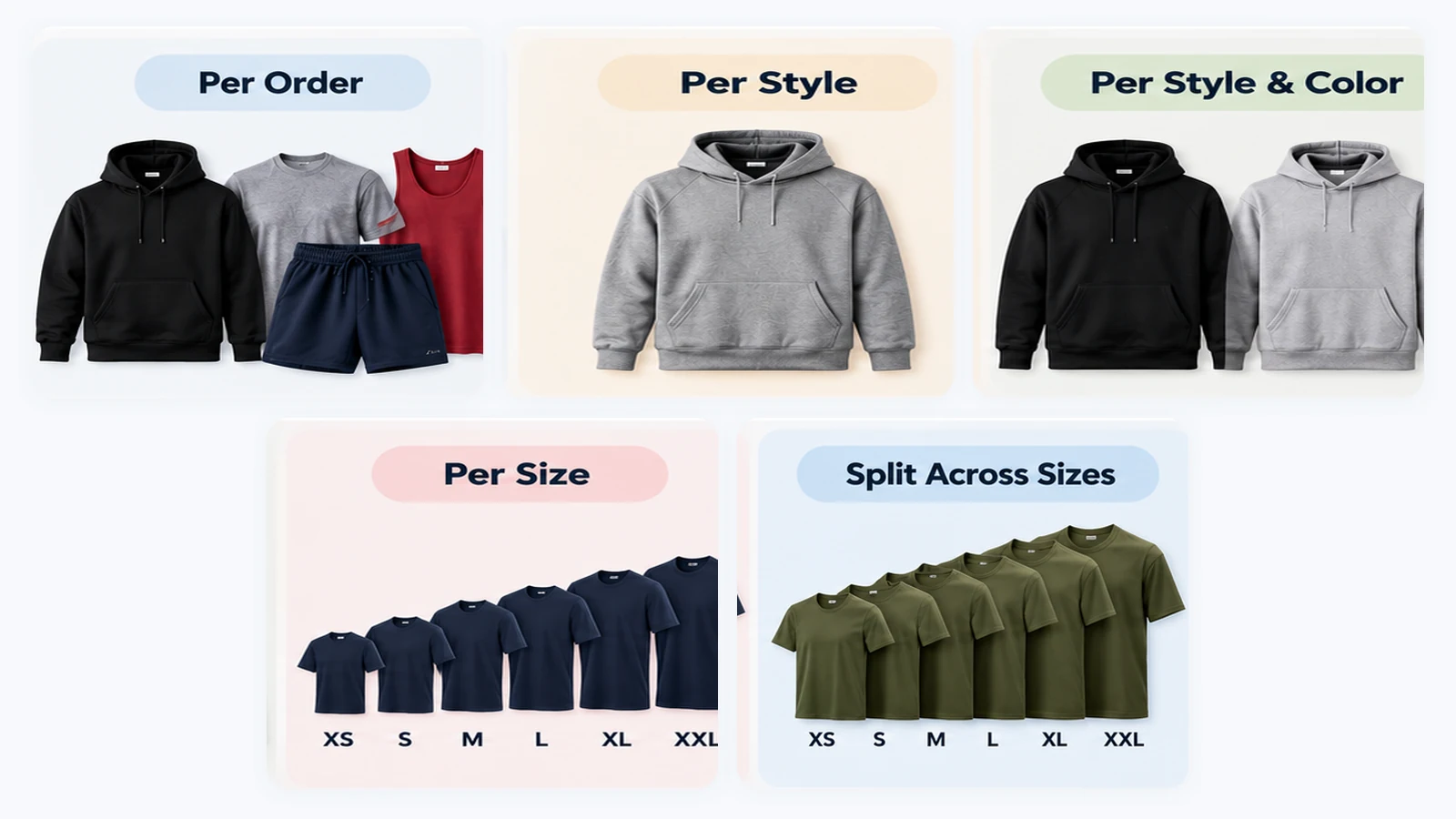
Two factories can both advertise "50 pieces minimum" and mean very different orders. Before comparing quotes from any low MOQ clothing manufacturer, ask how the minimum is counted.
| How the Minimum Is Counted | What It Means | Example of a 50-Piece MOQ |
|---|---|---|
| Per order | Total pieces across all styles | 50 pieces in total, any mix of products |
| Per style | Each design must reach the minimum | 50 hoodies of one design; a second design needs its own 50 |
| Per style and color | Each colorway of each design must reach the minimum | 50 black hoodies plus 50 grey hoodies |
| Per size | Each size must reach the minimum | Rare for small batches; would mean 50 per size |
| Split across sizes | One style and color, sizes mixed freely within the total | 50 pieces of one design split across XS to XXL |

The last row is the most useful for a new brand. If a minimum can be split across a full size run, 50 pieces across six sizes works out to about eight pieces per size: a realistic launch quantity. At Best Gym Wears, for example, the minimum is 20 pieces per style on every product, and it can be split across sizes within one design and colorway.
Fabric MOQ vs Garment MOQ
A low MOQ clothing manufacturer's garment minimum is not the only minimum in play. Custom-dyed fabric, special knits and printed fabric often carry their own supplier minimums, which can be far higher than the garment run. Choosing fabric the factory already stocks, in a standard color, is often the difference between a small order being possible or not.
How Low Is Low? Comparing Production Models
| Production Model | Typical Minimum | Customization | Best Use |
|---|---|---|---|
| Print on demand and blank decoration | Often one piece | Logo or print on an existing blank | Testing designs with no inventory |
| Small-batch cut and sew from a low MOQ clothing manufacturer | Tens of pieces per style, set by the factory | Your pattern, fit, fabric choice, labels | Launching a branded collection |
| Standard bulk production | Higher minimums per style and color | Full control, custom fabrics and colors | Proven styles with predictable demand |
Print on demand avoids minimums but limits fit, fabric and construction to whatever blank the provider stocks. Bulk production gives the lowest unit cost but the highest inventory risk. Small-batch manufacturing sits between them: you get your own pattern, fabric and branding, in quantities you can realistically sell.
Low MOQ vs Bulk Manufacturing
Working with a low MOQ clothing manufacturer is not automatically better than bulk production. It is a different trade-off.
| Factor | Low MOQ Production | Bulk Production |
|---|---|---|
| Cash tied up in stock | Lower | Higher |
| Cost per unit | Higher, because setup is spread over fewer pieces | Lower |
| Fabric and color options | Usually limited to stocked materials | Custom dyes and fabrics become possible |
| Risk of unsold stock | Lower | Higher |
| Ability to test styles | High | Low |
| Reorder flexibility | Reorders may be needed sooner | Fewer, larger reorders |
A practical approach for many brands: launch in small batches, watch which styles and sizes sell, then move proven styles to larger runs. Ask any low MOQ clothing manufacturer you consider whether unit pricing steps down as quantities rise, so you know the path from first order to reorder.
Domestic vs Overseas Small-Batch Manufacturing
US brands looking for a low MOQ clothing manufacturer usually weigh a domestic small-batch factory against an overseas exporter.
| Consideration | Domestic (USA) Manufacturer | Overseas Exporter |
|---|---|---|
| Communication | Same time zones, easier factory visits | Remote, so clear tech packs and sample approval matter more |
| Shipping | Domestic freight only | International freight, customs clearance and import duties |
| Unit cost | Generally higher labor cost | Often lower labor cost, offset partly by freight and duties |
| Origin label | Can be labeled "Made in USA" only if made in the US from US-made materials | Must state the country of manufacture, such as "Made in Pakistan" |
| Specialist capability | Varies by region | Some regions specialize in particular categories, such as sportswear or fightwear |
Neither option is universally cheaper or faster. The right comparison is landed cost per unit, meaning garment price plus freight, duties and broker fees, against your timeline and the quality of the approved sample.
Low MOQ by Product Type
Minimums vary by product because each one has different setup work, fabric and decoration, so the same low MOQ clothing manufacturer may quote different minimums for a T-shirt and a BJJ Gi. This table shows what typically drives the minimum for common sportswear and streetwear products, and what to ask a supplier.
| Product | What Drives the Minimum | What to Ask |
|---|---|---|
| T-shirts | Fabric weight and color, print method | Minimum per color, and whether print screens are charged per color |
| Hoodies and sweatshirts | Fleece fabric minimums, trims such as zips and drawcords, embroidery setup | Minimum per colorway; stocked versus custom-dyed fleece |
| Leggings and sports bras | Stretch fabric, sizing complexity, sublimation or bonded details | Whether sizes can be split and which fabrics are held in stock |
| Tank tops | Cut style, binding or ribbing, print area | Minimum per style when several cuts share one fabric |
| Rash guards | Sublimation print layouts, stretch fabric | Minimum per design and whether sizes can be split |
| Tracksuits | Two garments per set, matching fabric and trims | Whether jacket and pants count as one style or two |
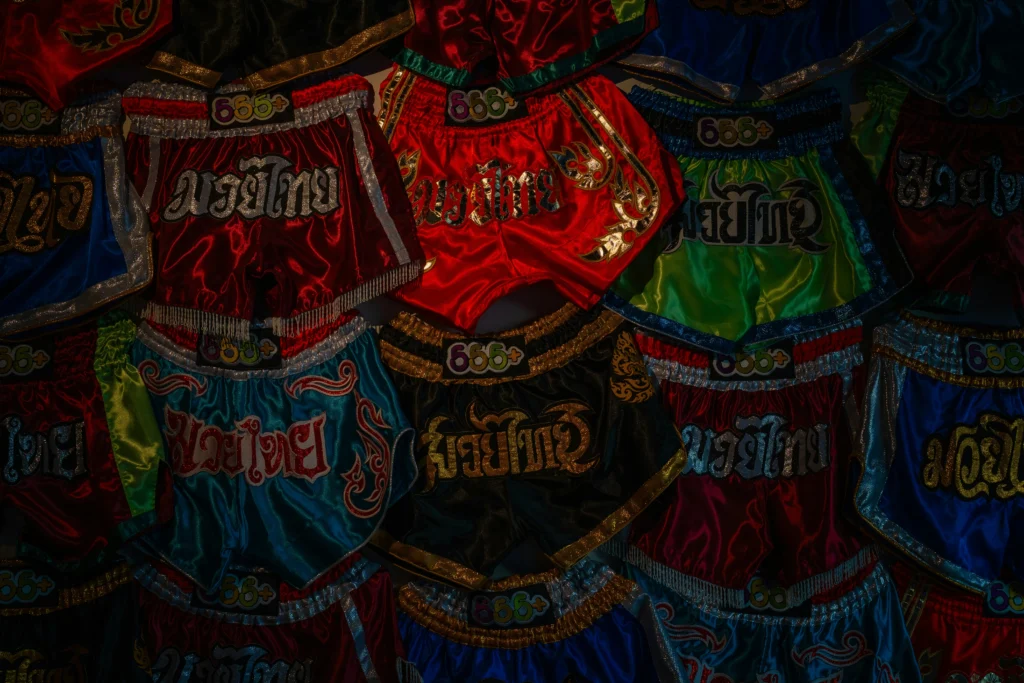
| Fightwear such as BJJ Gis and Muay Thai shorts | Specialist fabrics, embroidery or satin printing, size grading | Minimum per size range and decoration method |
| Weightlifting belts and accessories | Materials such as leather or nylon, buckles, molds or dies | Minimum per material and per hardware type |
| Duffle bags | Body fabric, zips, hardware, logo method | Minimum per color and whether hardware is stocked |
At Best Gym Wears, the minimum is 20 pieces per style across every product we make, including Gym T-shirts, BJJ Gis, Muay Thai shorts, weightlifting belts and custom duffle bags. Leggings and sports bras are part of our women's fitness wear range on the same 20-piece minimum.
For startups and brands launching a first collection, we can be more flexible still. Share your launch plan, sizes and budget, and we will work out a quantity and sampling route that fits.
Private Label and Streetwear at Low MOQ
Private Label Clothing
Private label means the garment carries your brand, not the factory's. At small-batch quantities, that typically covers your woven or printed neck labels, hang tags, care labels and branded packaging. Each of these has its own minimum, often set by the label or packaging supplier, so ask a low MOQ clothing manufacturer which branding items it can produce at your quantity and which may need a larger run.
Streetwear
Streetwear brands often want heavyweight fabrics, oversized fits, garment dyes or washes, and custom colors. Those choices usually push minimums up, because special dyes and finishes add fabric and processing minimums. When briefing a low MOQ clothing manufacturer for streetwear, a common route is to launch in stocked fabrics and standard colors, then move signature colorways to larger runs once demand is proven.
How to Calculate the MOQ You Actually Need
Start from what you can sell, not from the number a low MOQ clothing manufacturer publishes.
- Choose the styles and colors for launch. Fewer colorways keep each one above the minimum.
- Set the size range. List every size you plan to offer.
- Estimate sales per size for your first selling period. Use pre-orders, past sales, audience size or a conservative guess.
- Add the sizes together for each style and color. That total is the quantity you need.
- Compare it with the factory's minimum and counting method. If your total is below the minimum, reduce colorways, combine styles on one fabric, or confirm whether sizes can be split.
For example, a brand launching one hoodie in black across five sizes might plan 4 XS, 10 S, 14 M, 12 L and 6 XL: 46 pieces. Against a 50-piece minimum per style split across sizes, the brand either adds four pieces to its strongest sizes or asks whether the supplier will accept 46 with a small upcharge.
How to Reduce or Negotiate MOQ
Minimums exist for real cost reasons, so the most effective ways to lower them remove setup work rather than simply asking for a discount.
- Use stocked fabric in standard colors. Custom dyes and special knits carry their own supplier minimums.
- Reduce colorways. One color at 50 pieces is easier to produce than three colors at 17 each.
- Ask whether sizes can be split. This is often the single biggest difference for a new brand.
- Group styles on the same fabric. A tank top and a T-shirt cut from the same fabric may share a fabric minimum.
- Simplify decoration. Fewer print colors or one embroidery placement means less setup.
- Accept a small-order surcharge. Some factories will run below their minimum if setup costs are covered.
- Commit to a reorder. A realistic reorder plan can make a factory more flexible on the first run.
- Approve a sample first. A signed sample reduces back-and-forth and makes a small run more efficient for both sides.
How to Find and Choose a Low MOQ Clothing Manufacturer
Finding the name of a low MOQ clothing manufacturer is easy; shortlisting the right one takes more work. Search directories and industry listings, ask other brand founders, and review manufacturers' own websites for published minimums and product specialisms. Then contact several and compare their answers to the same questions.
| Question to Ask | Why It Matters |
|---|---|
| What is the minimum, and is it per order, style, color or size? | Decides if your launch plan fits |
| Can sizes be split within the minimum? | Makes small runs workable across a size range |
| Which fabrics and colors are stocked? | Stocked materials keep minimums low |
| What does a sample cost, and how long does it take? | Samples are where fit and quality are settled |
| Which decoration methods are done in-house? | Outsourced printing or embroidery can add minimums and time |
| How is quality checked before shipping? | Small runs have little room for defective pieces |
| Can you supply labels, tags and packaging at my quantity? | Private label branding has its own minimums |
| Will labels meet my market's requirements? | US apparel needs fiber content, origin and maker identity |
| What shipping terms do you quote, such as FOB or DDP? | Determines who pays freight and duties |
| What are the payment terms? | Deposit and balance terms affect your cash flow |
A low MOQ clothing manufacturer worth working with will answer these clearly in writing. Vague replies on minimums, samples or shipping are an early warning sign.
Ordering From an Overseas Clothing Exporter: What US Brands Need to Know
Most of the rules for importing apparel into the USA apply no matter how small the order, so they matter as much with a low MOQ clothing manufacturer as with a bulk factory.
Labeling
Under the FTC's textile labeling rules, apparel sold in the US needs a label showing fiber content by generic fiber name and percentage, the country of origin, and the identity of the manufacturer or dealer, either by name or by an FTC-issued Registered Identification Number (RN). Care labeling is covered by a separate FTC rule. For imported goods, the importer is legally responsible for correct labels, and the country of origin must name the specific country, such as "Made in Pakistan". A good exporter can produce compliant labels, but the brand should approve the label content.
Duties and De Minimis
Duty-free de minimis treatment for low-value shipments was suspended for all countries under Executive Order 14324, effective for goods entered on or after August 29, 2025. In practice, small commercial apparel shipments can no longer rely on entering duty-free because of their value. Duty rates depend on each product's tariff classification and current trade measures, which have changed several times recently, so confirm landed costs with a licensed customs broker before you order.
Shipping Terms
Ask whether a quote is FOB (you arrange and pay for international freight and import costs) or DDP (the supplier delivers with duties and import costs paid). DDP is simpler for a first order but makes the supplier's quote look higher; FOB gives more control but requires a freight forwarder or broker.
Where Best Gym Wears Fits
Best Gym Wears designs and manufactures custom gym wear, sportswear, activewear and fightwear for brands in the USA, Europe and worldwide. US brands can see how we work with them on our gym wear manufacturer for USA brands page.
As a low MOQ clothing manufacturer, we start every product at 20 pieces per style, with extra flexibility for startups, and offer branding options including printing, embroidery, labels, tags and packaging. You can review our fabric options before requesting a sample.
Low MOQ Clothing Manufacturer FAQs
What does MOQ mean in clothing manufacturing?
MOQ means minimum order quantity: the smallest number of pieces a manufacturer will produce in one order. It exists because pattern, cutting, fabric and decoration setup costs are similar for small and large runs.
What is a low MOQ for clothing?
There is no fixed standard, and each low MOQ clothing manufacturer sets its own. Small-batch manufacturers commonly set minimums in the tens of pieces per style, while bulk factories set much higher minimums. Always check whether the minimum is per style, per color or per size.
Is 50 pieces a low minimum for custom clothing?
For cut-and-sew garments with your own pattern and branding, 50 pieces per style is generally a small run, especially if it can be split across sizes. For printed blanks, minimums can be lower.
Can I mix sizes and colors within one MOQ?
Many manufacturers allow sizes to be split within one style and color. Mixing colors is less common, because each colorway usually needs its own fabric and setup. Ask each supplier directly.
Do overseas clothing manufacturers ship small orders to the USA?
Yes, many exporters ship small orders to the USA. Since August 29, 2025, duty-free de minimis treatment is suspended for commercial shipments from all countries, so plan for duties, customs clearance and correct labeling on every order.
How can I lower my MOQ?
Ask your low MOQ clothing manufacturer which fabrics are stocked, use standard colors, reduce colorways, ask whether sizes can be split, simplify decoration, or accept a small-order surcharge.
Choosing a Low MOQ Clothing Manufacturer With Confidence
A good low MOQ clothing manufacturer makes small runs workable without hiding the trade-offs. Before ordering, confirm how the minimum is counted, which fabrics keep it low, what the sample costs, how labels will meet your market's rules, and what the landed cost will be once freight and duties are added.
If you are planning a gym wear, activewear or fightwear launch, you can start with the product pages linked above, or contact Best Gym Wears with your tech pack, quantities per size and target market for a written quote.